Secondary processes
Secondary decoration and assembly, in-house
Eight decoration processes run on the same site as the moulding. That is not a convenience — a coating behaves differently over a radius than on a flat wall, and doing it on site is what lets us specify it properly.
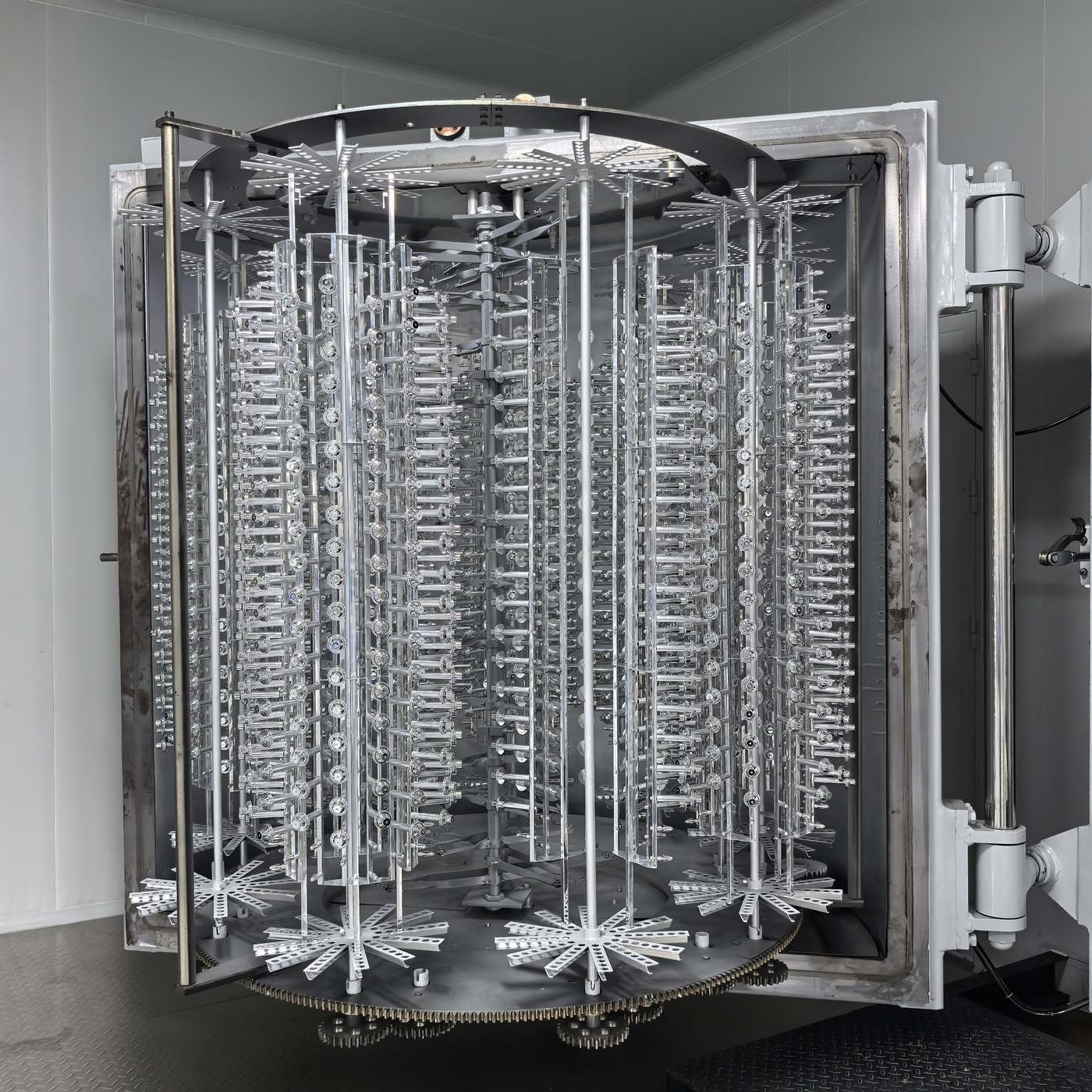
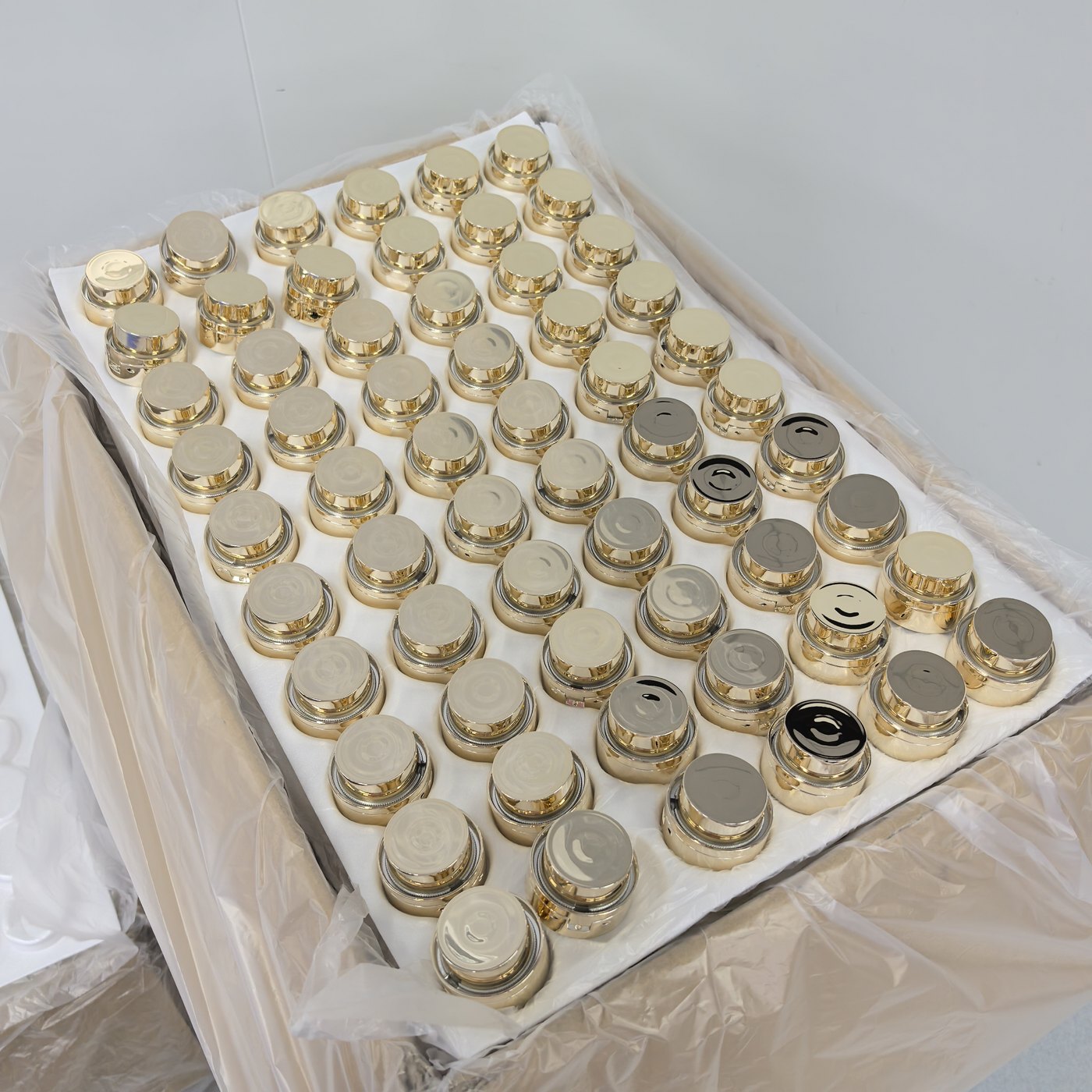
UV vacuum metallizing (NCVM / PVD)
Metallized surface finishing for caps, collars and closures, by non-conductive vacuum metallizing (NCVM) or PVD.
Typical use:
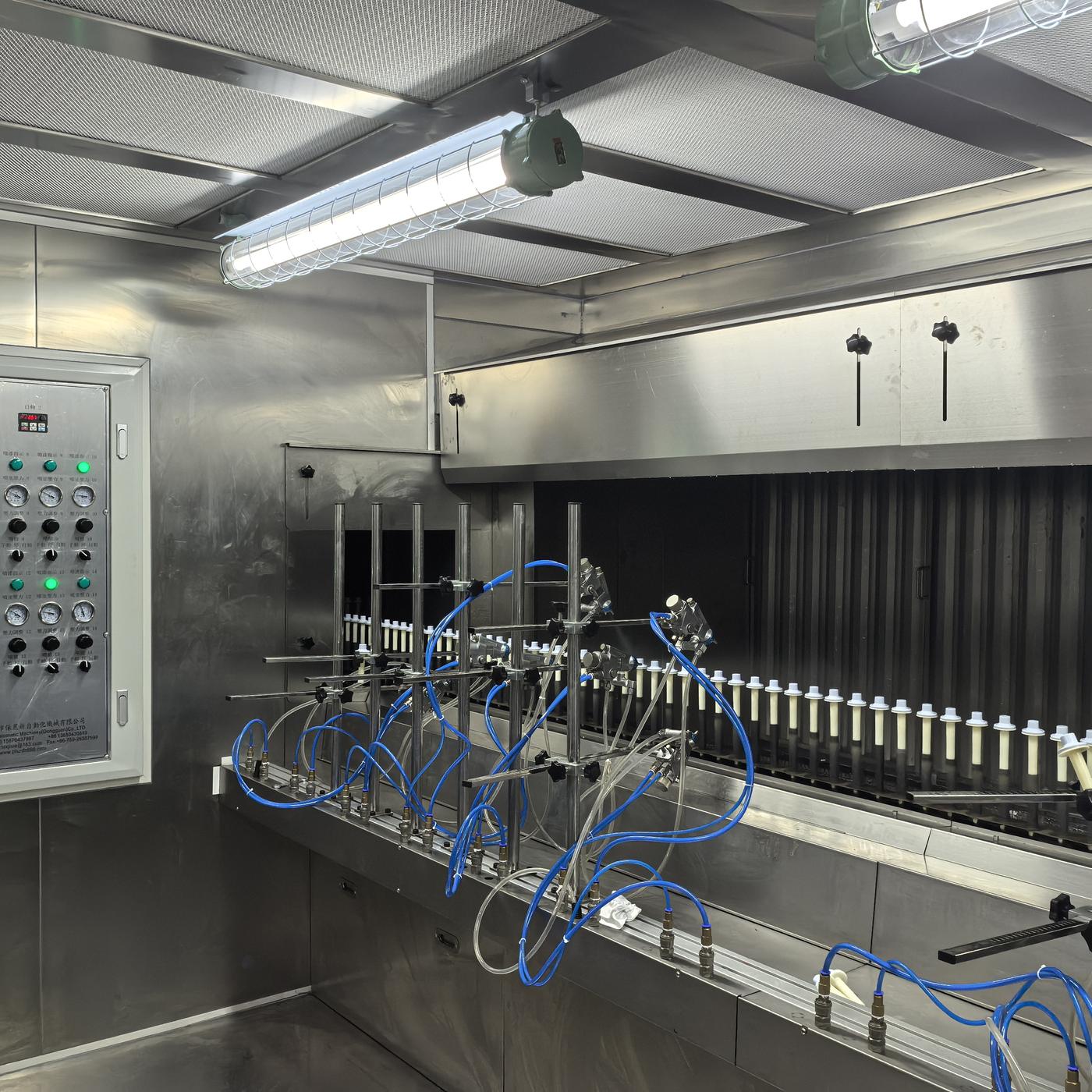
Spray painting
Special-effect and colour spray, including soft-touch and gradient.
Typical use: Colour, soft-touch and gradient effects. Soft-touch is the usual route for premium cream jars and it changes how the surface handles fingerprints, so it is specified together with the closure.
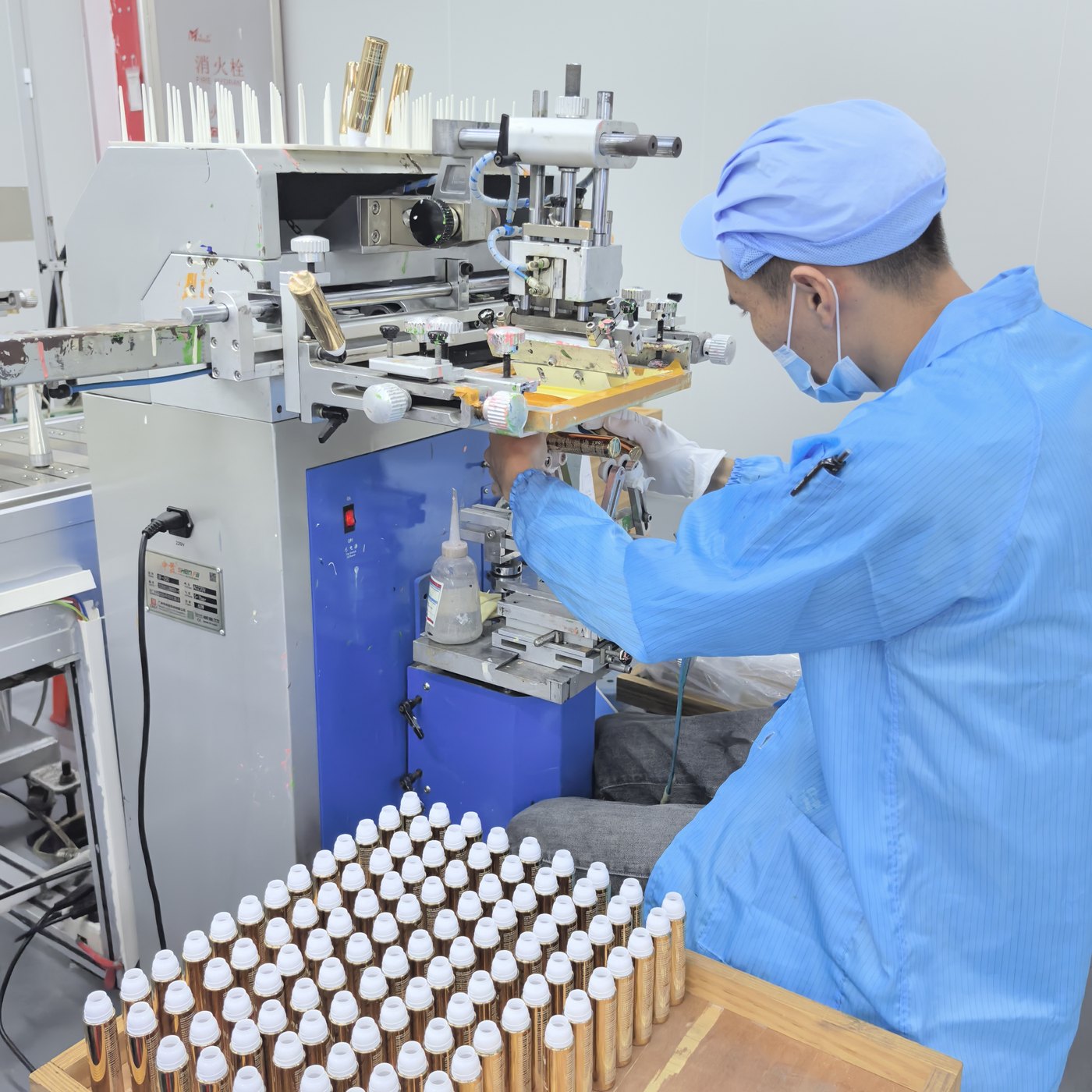
Silk-screen printing
Logo and decoration printing, single or multi-colour.
Typical use: Logos and decoration in single or multiple colours. Print legibility on a small radius is the usual constraint, and we position to avoid distortion.
Hot stamping
Metallic foil stamping for premium brand marks.
Typical use: Metallic foil marks for premium brand identity. Needs a flat or gently curved print area; we tell you when a geometry will not take foil cleanly.
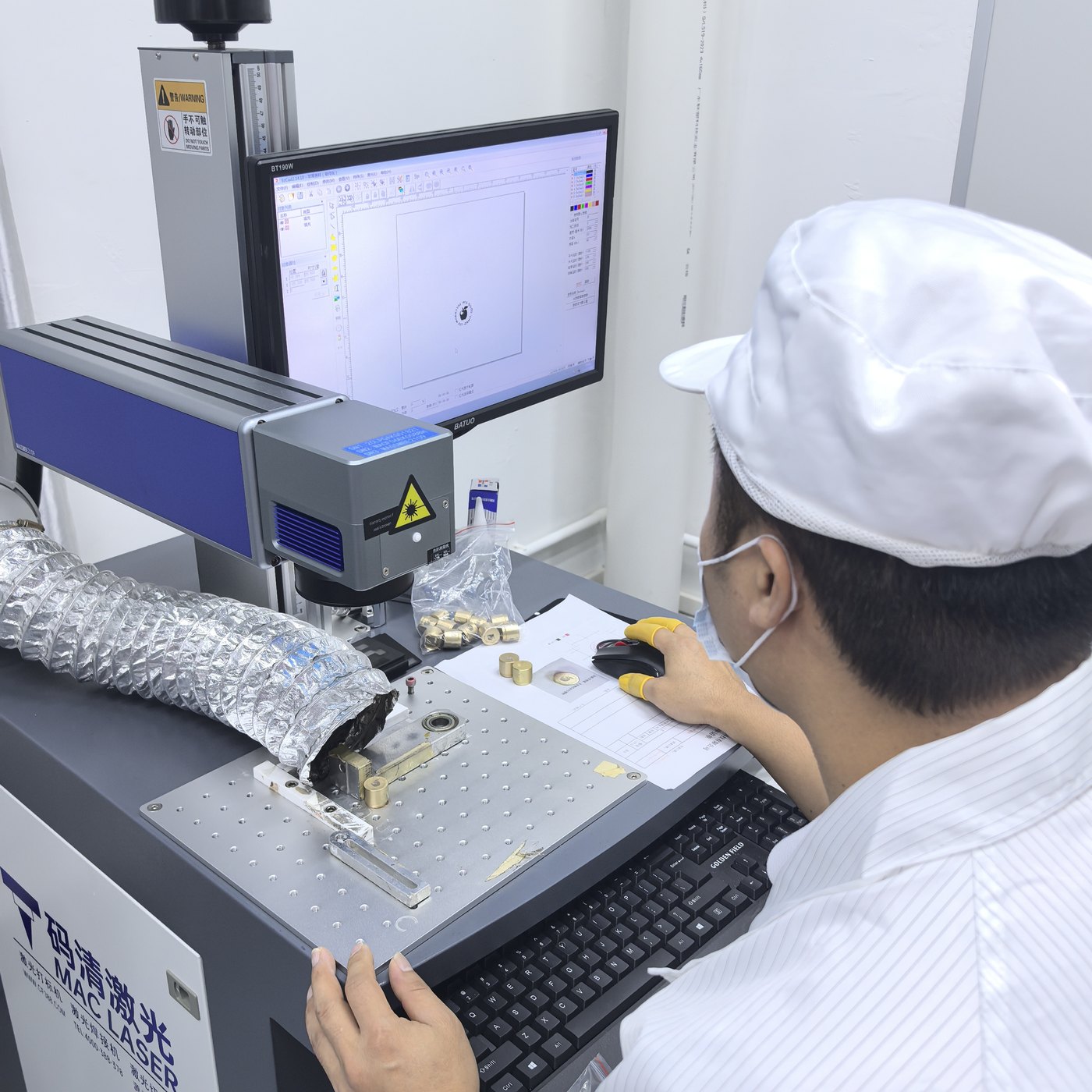
Laser engraving
Permanent laser marking on moulded and metal parts.
Typical use: Permanent marking on moulded and metal parts, including safety and traceability text. Monochrome, and it will not wear off the way printed ink can.
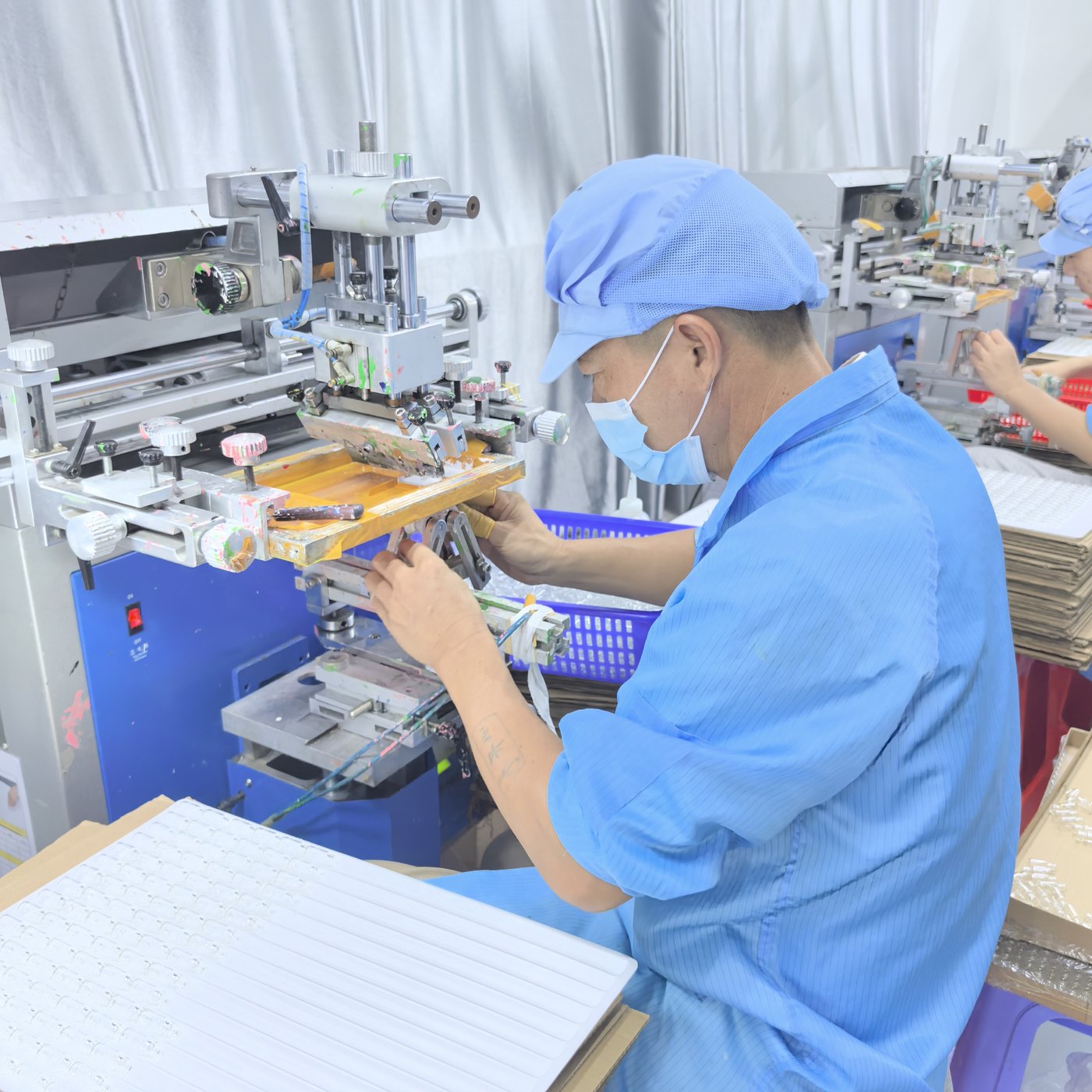
Pad printing
Curved-surface printing on closures and small parts.
Typical use: Curved surfaces and small parts where screen printing cannot reach. The standard route for closures, hinges and small components.
3D spray painting
Multi-axis spray for special-effect surfaces, textures and multi-colour decoration on curved parts.
Typical use: Special-effect surfaces and textured finishes, and multi-colour decoration on curved parts where pad printing would need several stations.
Assembly
Semi-finished assembly so you receive pack-ready components.
Typical use: Semi-finished assembly so components arrive pack-ready rather than as loose moulded and decorated parts.
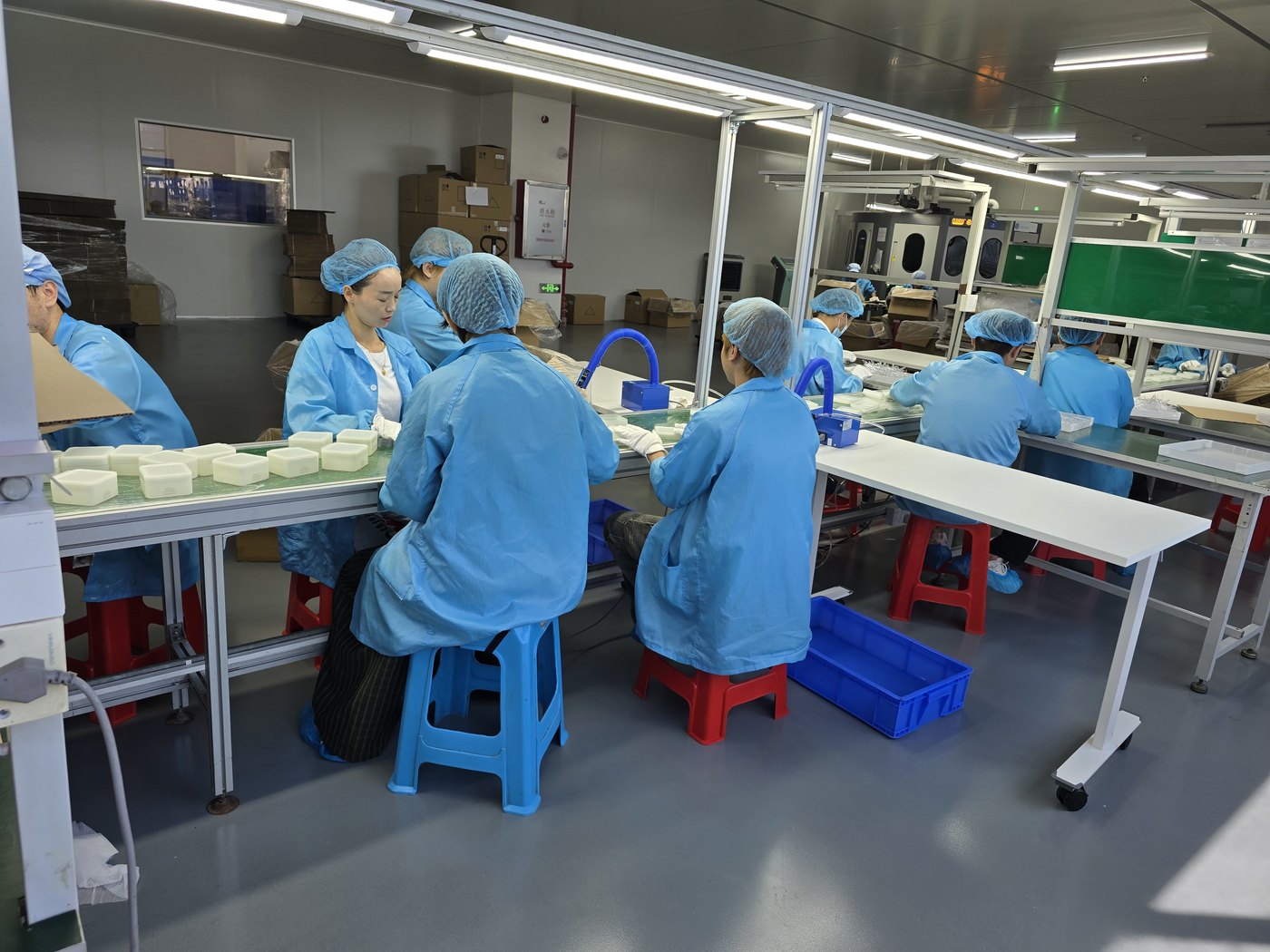
The decoration floor, photographed
Each process below runs on site. Photographed during production, not staged.

Sending a reference sample?
If you have a part whose look or function you want matched, send it with your brief. We will tell you directly which route can reach it — and which cannot.
Decoration questions
Which decoration process should I choose?
Can decoration be matched to a reference sample?
How is decoration approved?
Does metallizing wear off with handling?
Is tooling required for decoration?
Can you match colour across a whole product range?
The quality system behind the finish
Decorated parts are rejected on appearance more often than moulded ones, so the process behind the surface carries more weight here than anywhere else on site.
- ISO 9001 — certificate 02824Q13728R0M, scope "production and sales of plastic packaging containers (licensed items excluded)", valid 2024-11-05 to 2027-11-04.
- IATF 16949 — IATF 0609721 (ZA-FCAV 2601506/R0S), scope "production of injection-moulded parts (excluding 8.3 product design)", valid 2026-07-24 to 2029-07-23. Plastic packaging suppliers rarely hold it; we do, because dimensional discipline and process control are exactly what a decorated closure has to satisfy.
- Clean areas — injection runs to Class 300,000, metallizing to Class 100,000 (GB standard). We hold no third-party cleanroom report, so this is stated as our operating standard rather than a certified class.
- Agreed per order — cross-cut adhesion, alcohol rub and abrasion limits are set against how the part will actually be handled, and written into the order rather than assumed.