Sourcing
Lead times and capacity: how a cosmetic packaging programme actually runs
By the Good Partner production and sourcing team. 13 min read · .
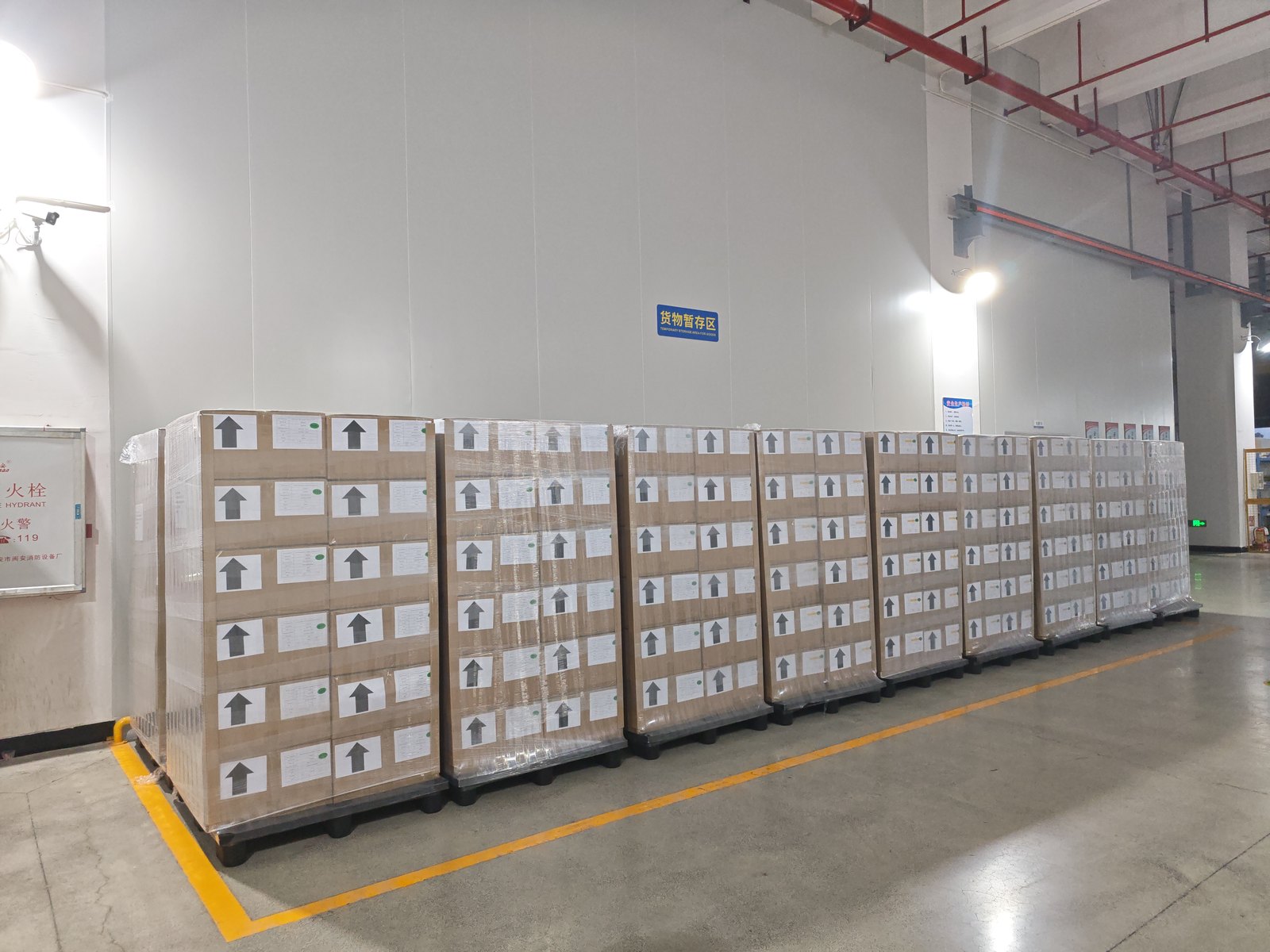
What you are actually waiting for
Lead time in cosmetic packaging is never one number. It is a chain of dependent steps, and the one that slips is rarely the one everybody watches. Programmes lose weeks to a late drawing change or a slow sample approval, and almost never to the moulding machine.
The sequence, step by step
Drawings are frozen. Tool design follows, then steel cutting. First trial shots come off the tool to prove it closes and fills. Those parts go out as approval samples. Decoration is trialled and colour-matched. Only then does stabilised production start, followed by inspection, packing and booking. Each stage has its own duration and, importantly, each one starts when the previous one finishes — so a delay early in the chain is not absorbed later, it is carried.
Where schedules really go wrong
In our experience the four usual causes have nothing to do with how fast a machine can run. Drawing changes after tool design has started, which push through every downstream step. Approval samples sitting unopened while the production slot is being held. Colour matching running in loops because there is no agreed numeric tolerance to judge against. And artwork that is not print-ready when it reaches the print stage. If you want to take weeks out of a programme, these are the places available to you.
What capacity means and does not mean
A machine count tells you what a plant can do over a season, not what it can start tomorrow. What actually determines your slot is scheduled work already committed, tool mounting and changeover time, and whether the processes you need are in-house or queued behind another factory. It also depends on how many processes your part needs: a component that is moulded, metallized, printed and assembled occupies four different resources in sequence, and the scarcest one sets the pace. Ask which resource is constraining your programme, because that answer is more informative than any headline figure.
Capacity at our site, stated plainly
We run 20,000 m² of production floor across two bases in Huizhou, with a workforce of more than 200. Injection moulding runs on 30 machines, including Sino-Japanese joint-venture equipment, in a dust-controlled workshop; vacuum metallizing runs on four lines inside a Class 100,000 hall. Tooling is designed, built and maintained by our own mould team, and secondary processes — spraying, printing, hot stamping, laser engraving, pad printing and assembly — all run in-house. The practical effect for scheduling is straightforward: none of those stages is waiting on a third party's queue, and a tool modification does not leave the building. Two things we do not claim are also worth stating. We do not hold a third-party cleanroom certificate, so the clean areas described above are our operating standard rather than a certified class, and our quality system is audited to ISO 9001 and IATF 16949 rather than to ISO 22716, which we do not hold.
Two external factors worth planning around
Chinese public holidays shut the whole supply chain rather than one factory, and Chinese New Year affects production for considerably longer than the official holiday because of labour movement around it. The other is freight: export capacity tightens at predictable points in the year, and booking late is expensive in both cost and time. Neither is a supplier problem and neither is avoidable, but both belong in your launch plan from the beginning rather than being discovered in month three.
Six ways to shorten a programme honestly
Freeze the drawing once, properly, and resist changing it during tool design. Turn approval samples around in days rather than weeks — this is the single largest lever you control. Approve colour against a signed physical reference with an agreed numeric tolerance, which ends matching loops. Standardise your packaging and labelling requirements early so packing does not become a late decision. Book freight when you place the order, not when goods are ready. And place repeat orders against a forecast rather than after stock runs down, since reordering is materially faster than starting cold.
What to ask before you accept a date
Ask when the clock starts — drawing freeze, deposit, or something else. Ask which stages are in-house and which are bought in. Ask how your programme would be affected by peak season and by the holiday calendar. Ask what happens to the schedule if your approvals run late. Ask what expediting actually buys, since it usually buys a slot rather than machine speed. And ask for the reorder lead time separately from the first-order lead time, because they are genuinely different and only one of them is ever quoted.