Tooling
Tooling, samples and unit price: what a cosmetic packaging quote actually contains
By the Good Partner production and sourcing team. 13 min read · .
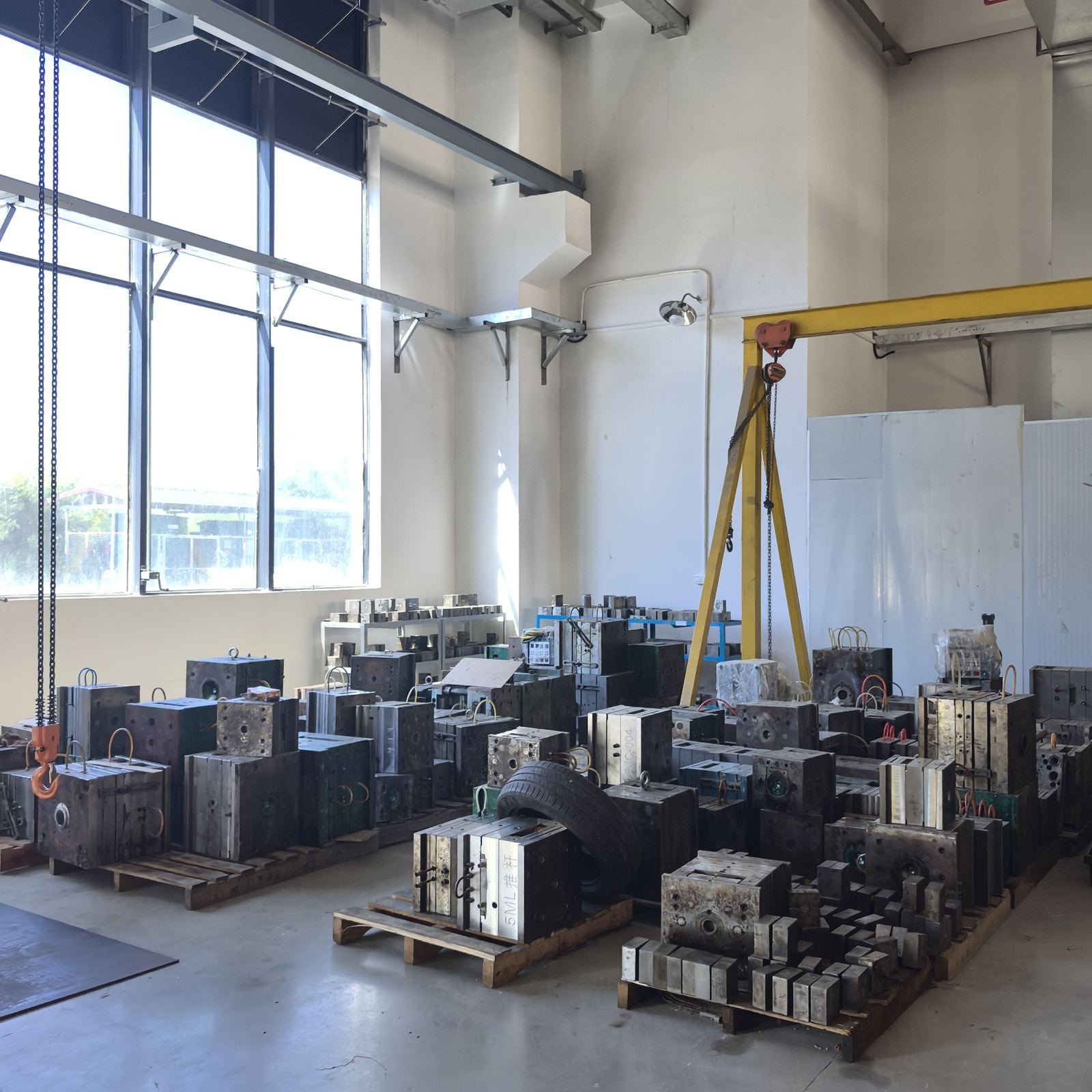
Three different piles of money
A tooling quote, a sample fee and a unit price are three different things. Comparing suppliers on a single number is how projects lose money later. Put together they describe one project, but they behave nothing alike: tooling is paid once and then owned, samples are paid a few times and forgotten, and unit price recurs forever. A supplier who bundles all three into one headline can make any part look cheap, and any comparison between two of those headlines is meaningless.
Tooling: what you are actually buying
A mould price is set by how much work the tool has to do. Cavity count multiplies both the steel and the risk: more cavities cost more and produce faster, and if the tool is complicated, every additional cavity multiplies the things that can go wrong. Slides, lifters and unscrewing mechanisms add cost because they add moving parts that wear. Hot runner systems cost more up front and reduce waste per shot. Steel grade is the quiet variable — a harder, better-grade tool steel lasts far longer and costs noticeably more, and the difference shows up as surface quality and dimensional drift in year three, not in week one. Ask what grade of steel, how many shots the tool is built to survive, and who maintains it.
Why first samples are never perfect
Sampling pays for machine time, set-up, material and a technician's judgement, and it is not a sign of failure that the first trial is not the final part. A sensible programme runs several rounds: initial shots to confirm the tool closes and fills, adjustment rounds to deal with sink marks, warpage and flash, then decoration trials, then approval samples from stabilised production settings. Ask how many rounds are included and what happens after that, because 'unlimited samples' usually means the cost is buried somewhere else, and 'one round' means you will pay for every iteration you genuinely need.
What moves the unit price
Cycle time is the dominant factor, and it is largely decided by wall thickness and cooling — heavier sections take longer to cool and stay in the tool. Beyond that, price follows the number of operations: every additional decoration step, every assembly step, every colour change and every operator touch adds cost. Yield matters more than buyers expect; the parts that must be scrapped are priced into the ones you receive. And packaging method counts: bulk-packed components cost less per unit than individually bagged or retail-ready packed ones, which is a decision made at quotation, not after shipping.
What is usually left out of the quote
Read a quote for what it omits, not only what it includes. Commonly absent: modification cost if you change the drawing, and lead time to do it; export packing and inland transport to port; duties and taxes, which belong to whoever is named as importer; currency movement over a long tool build; third-party inspection; and expediting. Any of these can be legitimate. None of them should be a surprise, and asking for them itemised is a normal request that competent suppliers answer without friction.
Why the lowest unit price often costs the most
A cheap unit price usually comes from somewhere specific. Optimistic cycle times that lengthen once the tool is running. Decoration quoted for a sample alone rather than for production scrap rates. Assembly assumed to be done elsewhere. Missing testing and inspection. Tool steel chosen for cost rather than for the life the programme actually needs. And occasionally simple under-quoting to win the order, followed by a revision once the tooling is captive. None of these are visible in the number, which is precisely why they cost more in the end.
How to compare two quotes properly
Send one specification to every supplier and require the three components quoted separately — tooling, sampling, unit price — each with what it covers. Ask for the assumed annual volume behind the unit price, since it is quoted against one. Ask for a validity period in writing. Ask what the tool is guaranteed for and what a modification costs. And settle tooling ownership before signing, because that question does not get cheaper to answer once production has started. Two quotes built on the same assumptions can genuinely be compared; two quotes built on different ones cannot, no matter how tidy the spreadsheet looks.
Questions that save money later
Five questions, asked once at the beginning, prevent most cost disputes. What dimensional tolerances are actually required and where — tolerances drive tool complexity more than aesthetics do. What is the expected scrap and damage allowance, and who carries it. What are the packing and pallet standards the destination requires. What happens to the tooling if the programme pauses for a year. And what is the minimum order quantity once the tool exists, because MOQ and tooling repay each other and nobody should discover the pairing after paying for the mould.
The sentence worth remembering
Tooling buys you capability, samples buy you certainty, and unit price buys you the next three years. Judge them separately and you will almost always pick a different supplier than you would from a single total.