Sourcing
MOQ in cosmetic packaging: where the minimum comes from and how to move it
By the Good Partner production and sourcing team. 12 min read · .
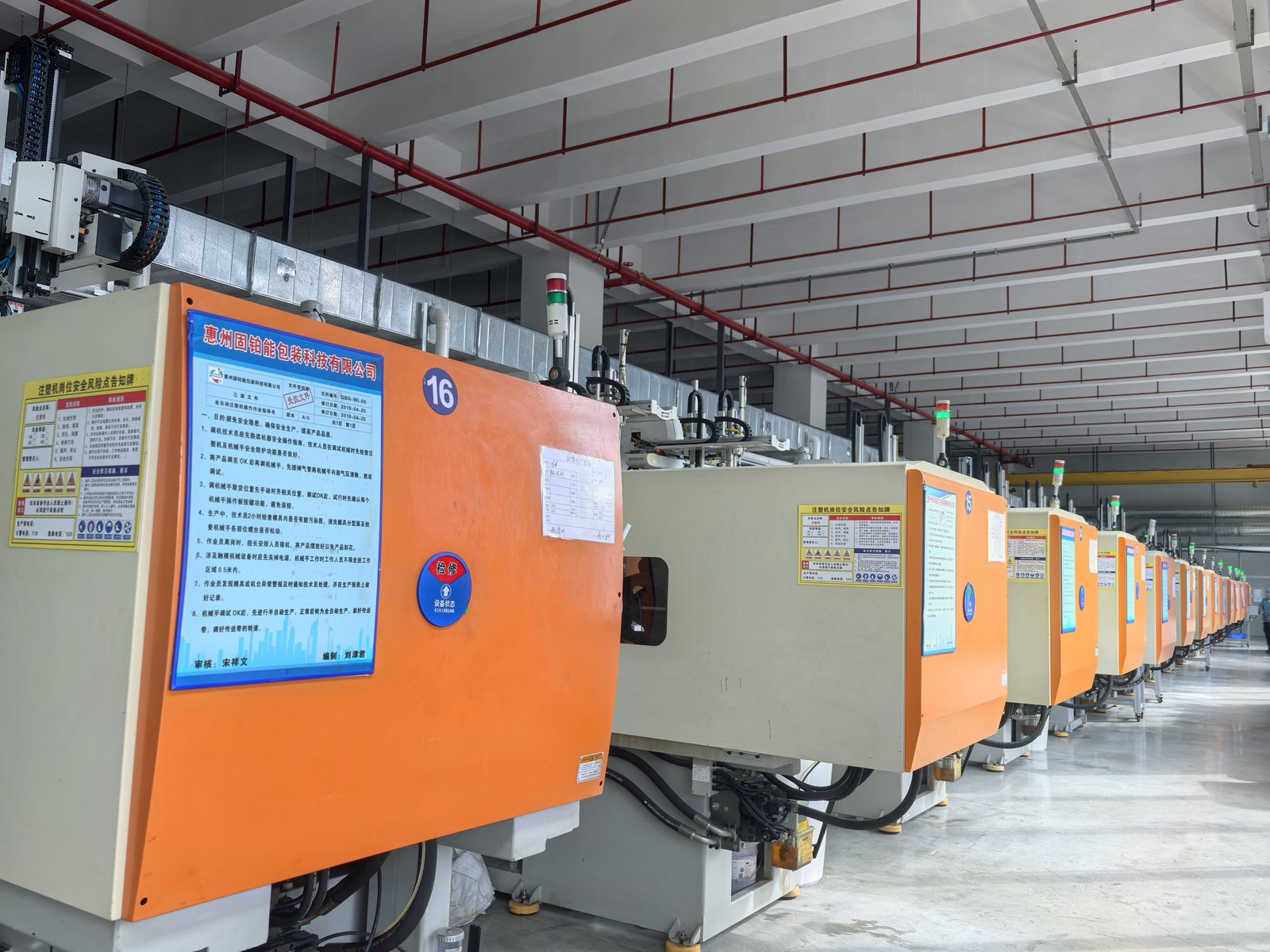
Where minimums actually come from
A minimum order quantity is not a number invented to make ordering difficult. It is the volume at which the fixed work of setting up a run is recovered. Once you know which operation sets it, it becomes negotiable in a way that asking for a lower number never is.
Four places a minimum is created
The first is material. Resin and masterbatch are bought in supplier lot sizes, and a bespoke colour often has its own compounding minimum that has nothing to do with your part. The second is injection set-up: mounting the tool, running the machine up to temperature, purging the previous material, and scrapping the shots before the process stabilises. That cost is the same whether the run lasts an hour or a week. The third is finishing, and it is usually the heaviest of the four. The fourth is packing and despatch, which sets a floor of its own because an export shipment has costs that do not fall with quantity.
Why decoration sets the floor more often than moulding does
Undecorated moulded parts often carry a comparatively modest minimum. Add decoration and the picture changes. A spray line has to be cleaned between colours, so short runs in many colours carry disproportionately high set-up. A vacuum metallizing line deposits by load or rack, so what matters is filling the rack rather than the number of parts on it. Silk-screen printing needs screens made and set for each colour, which is a fixed charge per artwork regardless of volume. If your minimum feels high relative to how simple the component looks, the cause is usually somewhere in decoration rather than in the moulding.
MOQ and unit price are the same lever
Unit price falls as quantity rises for a mundane reason: the fixed work is spread across more parts. That is also why paying more for tooling can lower the recurring price — a multi-cavity tool moulds faster, so the same machine time produces more parts. It cuts the other way too. A tool built cheaply around a low minimum can lock you into a unit price that never improves, because the cycle time is what it is. When you compare two offers, hold annual volume constant and compare both numbers, since quoting one without the other is how an unremarkable price looks competitive.
What genuinely reduces a minimum
Some reductions are structural rather than concessions. Using a standard resin colour instead of a bespoke match removes a compounding minimum outright. Fewer printing colours, or printing fewer faces, removes screens and set-up passes. Accepting a longer lead time lets a supplier combine your run with another and share the changeover. Reusing an existing tool removes tooling set-up entirely. What rarely works is simply asking for a smaller number on the same specification — the set-up is still there, and a supplier who agrees without changing anything has usually moved the cost into the unit price.
Minimums across the life of a programme
Three points are worth settling before the first order. What the minimum is on the first production run. What it is on reorder, which is often lower because the tool exists and the process has been run in. And what happens if the programme pauses for a year — some minimums are quoted against continuous production and do not survive a long gap unchanged. That third question costs nothing at the start and is expensive to discover later, and it belongs with tooling ownership in the same conversation.
How it works at our plant
Because moulding, tooling, decoration and assembly all sit under our own roof in Huizhou, there is no third-party minimum stacked on top of ours. Tooling is built and maintained by the in-house mould team rather than sent out, moulding runs on our own machines, and finishing runs on our own vacuum metallizing and printing lines. What remains is the real constraint: machine set-up, line changeover and material lot sizes. We would rather tell you which of those applies to your part than quote a single figure that hides it.
Six questions to ask about any MOQ
Ask which operation sets the minimum — that answer tells you what to change. Ask whether it is per article, per colour, or per order value. Ask for the unit price at two or three volumes so you can see how steeply it moves. Ask what the reorder minimum is once the tool exists. Ask whether a longer lead time would reduce either figure. And ask what happens to both if the programme pauses. Two suppliers quoting the same MOQ can be offering very different things, and these questions separate them quickly.